search this blog

Loading...

Yet again a Boeuf Bourguignon recipe Julia Child style

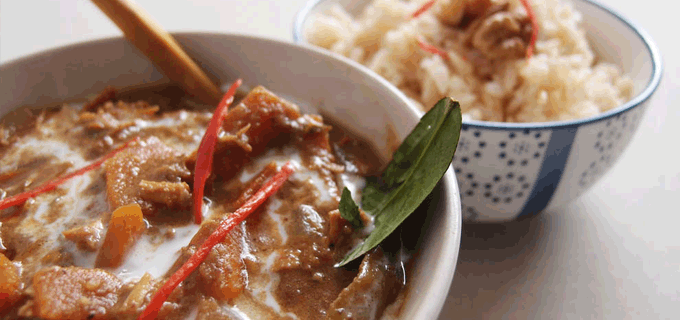
Boeuf Bourguignon served with rice
Since we have seen the movie Julia and Julia, I got to know about this excentric lady named Julia Child that is a famous chef from America. That is also maybe the reason why I never heard from her before because she was a really famous TV cook in the US before my time and she wrote this recipe classic that I have never gotten to read, which is called "Mastering the Art of French Cooking".The movie is really fun to watch and pretty much the only movie that I want to recommend, starring Meryl Streep in it. I am normally not a fan of her, but the way she's playing Julia Child in this movie is really fun and short while. The disadvantage of us, really liking this movie, is that I, of course, now was being askedto cook the Boeuf Bourguignon, which is featuring in this movie, original Julia Child style. Good on my. And I know that in this very moment I am starting to bore the avid reader of my blog already, as I did a quick Google research on this topic and I found that that I am maybe blogger number 10000 that cooks this very recipe and blogs about it. So please bare with me cooking my Boeuf Bourguignon Julia Child style, enjoy trying to cook it as well and honestly speaking, once you made it yourself you might find it highly addictive because the tastes are just awesome.
I "nearly" made the original recipe I guess (found one on the internet) and only slightly adapted it as I did not have any Champignons and the only wine that I had was alambrusco emilia ca' de' medici. But everything turned out quite awesome and next time I will use a more heavy red wine because I think it will give the dish a great note.
The recipe i found published over here and here we go with my Julia Child Boeuf Bourguignon recipe.

For the Stew
  • 6 ounces bacon, solid chunk
  • 1 tablespoon olive oil
  • 3 lbs lean stewing beef, cut into 2-inch cubes
  • 2 carrot, peeled and sliced
  • 1 onion, peeled and sliced
  • 1 teaspoon salt
  • 1/4 teaspoon pepper, freshly ground
  • 2 tablespoons flour
  • 3 cups red wine (a full bodied wine like Bordeaux or Burgundy or Chianti)
  • 2 -3 cups beef stock (Simple Beef stock is posted on the site, unsalted and defatted)
  • 1 tablespoon tomato paste
  • 2 garlic cloves, mashed (you may choose to add more)
  • 1 sprig thyme (or 1/2 teaspoon dred thyme)
  • 1 bay leaf, preferably fresh
For the braised onions
  • 18 -24 white pearl onions, peeled
  • 1 1/2 tablespoons unsalted butter
  • 1 1/2 tablespoons olive oil
  • 1/2 cup beef stock
  • salt & fresh ground pepper
  • 1 bay leaf
  • 1 sprig thyme
  • 2 sprigs parsley
For the Sauteed Mushrooms
  • 1 lb mushroom, quartered
  • 2 tablespoons unsalted butter
  • 1 tablespoon olive oil 
First prepare the bacon: cut off the rind and reserve. 
Cut the bacon into lardons about 1/4" thick and 1 1/2" long. Simmer the rind and the lardons for ten minutes in 1 1/2 quarts of water. 

Drain and dry the lardons and rind and reserve.
Pre-heat the oven to 450°F. 

Put the tablespoon of olive oil in a large (9" - 10" wide, 3" deep) fireproof casserole and warm over moderate heat.
Saute the lardons for 2 to 3 minutes to brown lightly.
Frying the lards
Frying the lards

Remove to a side dish with a slotted spoon.
Dry off the pieces of beef and saute them, a few at a time in the hot oil/bacon fat until nicely browned on all sides.
Once browned, remove to the side plate with the bacon. 


Browning cubes of meat

In the same oil/fat, saute the onion and the carrot until softened. Pour off the fat and return the lardons and the beef to the casserole with the carrots and onion. Toss the contents of the casserole with the salt and pepper and sprinkle with the flour. Set the uncovered casserole in the oven for four minutes. Toss the contents of the casserole again and return to the hot oven for 4 more minutes.

Now, lower the heat to 325°F and remove the casserole from the oven. Add the wine and enough stock so that the meat is barely covered. Add the tomato paste, garlic and herbs and the bacon rind. Bring to a simmer on the top of the stove. Cover and place in the oven, adjusting the heat so that the liquid simmers very slowly for three to four hours. The meat is done when a fork pierces it easily.
 

While the meat is cooking, prepare the onions and mushrooms and set them aside till needed. Heat the butter and oil in a large skillet and add the onions to the skillet. Saute over medium heat for about ten minutes, rolling the onions about so they brown as evenly as possible, without breaking apart.
Pour in the stock, season to taste, add the herbs, and cover. Simmer over low heat for about 40 to 50 minutes until the onions are perfectly tender but retain their shape and the liquid has mostly evaporated.
Remove the herbs and set the onions aside. 

Onions stewing
Onions stewing
For the mushrooms, it is important that the mushrooms are very dry and and the oil in the pan must be very hot and you can not pile up the mushrooms on top of each other in the pan. Make sure there is only a few mushrooms in the pan. Now, heat the butter and oil over high heat in a large skillet. As soon as the foam begins to subside add the mushrooms and toss and shake the pan for about five minutes.
As soon as they have browned lightly, remove from heat.

Mushrooms frying and browning in the pan

To Finish the Stew:
When the meat is tender, remover the casserole from the oven and empty its contents into a sieve set over a saucepan. 
Braised beef removed from the heat

 
Wash out the casserole and return the beef and bacon to it (discarding the bits of carrot and onion and herbs which remain in the sieve).
Distribute the mushrooms and onions over the meat. 

Onions and mushrooms ready to go on top of the meat
Skim the fat off the sauce and simmer it for a minute or two, skimming off any additional fat which rises to the surface. You should be left with about 2 1/2 cups of sauce thick enough to coat a spoon lightly. If the sauce is too thick, add a few tablespoons of stock. If the sauce is too thin, boil it down to reduce to the right consistency. Taste for seasoning. Pour the sauce over the meat and vegetables. If you are serving immediately, place the covered casserole over medium low heat and simmer 2 to 3 minutes. Serve in the casserole or on a warm platter surrounded by noodles, potatoes or rice and garnished with fresh parsley. If serving later or the next day, allow the casserole to cool and place cold, covered casserole in the refrigerator. 20 minutes prior to serving, place over medium low heat and simmer very slowly for ten minutes, occasionally basting the meat and vegetables with the sauce.


Well, enjoy this one and like Julia Child used to say: Bon appetit :)

Seele, a artisanal spelt sourdough bread roll from Germany

Baked Seelen fresh from the oven
Ok, this is now going to be a little bit far fetched, so i got to explain a bit more lengthy. The homework for the bread day number 59 (organized and hosted by ninivepisces, a fellow Swabian) is to bake a special kind of bread that accompanies one dish perfectly, or as ninivepisces explains it on her intro to the bread baking day over here: "do you know as well the feeling about a special dish being only perfect with just the right kind of bread?"
The answer is, yes of course. I know many kinds of bread and many kinds of dishes that go so well together. Being from Swabian region in Germany, we love to eat potato noodles (Spätzle) that are immersed in a sheer incredible amount of gravy so the noodles literally swimming in the sauce. We are then having a few slices of wheat dough based farmers artisan bread to scoop up the left over sauce from the plate and to wipe the plate clean (I always used to tell my mom that I only do this we have to wash less dishes after the meal haha). I love the base treated soft pretzel bread rolls (Laugenwecken) with some savory toppings such as cooked or smoked ham, cream cheese etc.
But today I feel like I am not just going to make any kind of farmer's loaf. I will put my heart and soul together in baking the Swabian Seele (soul), which is the name of the kind of homemade bread roll that I will blog about today.
And this Seele is best used to scoop up tons of gravy from your plate as well. My favorite meal to go with that would be a hunter style Schnitzel (Jägerschnitzel), which is a natural Schnitzel (means it is not coated in breadcrumbs) that comes with a rich, creamy mushroom sauce that is so sumptuous that you don't want to waste a drop. And this kind of bread is just predestined to do the job. So here comes my recipe for the swabian soul, made with organic spelt flour to make the spelt sourdough so on top of all it's an amazing organic bread roll.
I found a perfect recipe for this bread roll over here (but I will only be making half of this recipe). But before trying to bake this kind of bread roll please make sure that you understand on how to work this special kind bread cause it's not very easy to work with indeed. I would say that after baking bread for a while you might be ready to try and make this one. But even from my picture you can see that my shaping techniques are being far away from being perfect even in the aftermath i thought that I do an all right job all in all. So I would suggest you first visit this page first to get some inspiration how to work this special, very wet dough. But don't shy away, it's absolutely doable and after a few times baking this bread you will get to slowly master the technique to make this self made bread.

Seele recipe:
Sourdough
  • 150 g spelt flour
  • 100 g water
  • 15 g sourdough starter
mix well and let is for about 12 - 16 hours

Main dough
  • take half of the sourdough that we made above
  • 50 g wheat flour
  • 375 g spelt flour
  • 315 g cold water
  • 1 spoon of honey
  • 9 g salt
  • 20 g lard
  • 5 g fresh yeast

Mix all the ingredient exept the salt and the lard and let it rest for 30 - 60 minutes on a warm place (around 25 degrees Celsius would be ideal). Then add that salt and work everything to a very smooth dough that can be easily loosened from the wall of the mixing bowl. Last but not least, add the lard in small pieces and knead it in. When all the lard has been worked in and the dough is nice and smooth, put everything in a resting bowl that you oiled well in. Put it away in a warm place for about 3 hours. During that time you have to fold it about 3 - 4 times (please go again this page to find out how to fold the dough is being folded - see this picture). The dough is really soft so this need some practice to fold the dough well enough and doing it will give it a good stand.
Wet dough consistency during the folding procedure
At the end of this, spray some water on a working surface and put the dough on it. Then wet both hands and squeeze 3 - 4 cm broad pieces from the dough. Pull this a bit in length (about 30 cm) and put them on your baking paper to rest. After all pieces are on the baking paper, let them rest another 15 minutes.
Pulled out dough resting for the oven
Now you spray some water on top of the dough and sprinkle cumin and rock salt on top of it. Then put the baking paper in the oven that has been well preheated at 250 degrees Celsius and pour a cup of water in the oven alongside so the hot steam will be all over the breads.After 5 to 10 minutes, when the breads reached a good color, open the oven and let the steam off, put the temperature down to 220 degrees Celsius.
Bake for another 15 - 20 minutes until the breads are nice and brown. Short before the ending of the baking, spray one more round of water on top of the breads so they get a nice and glistening effect on the surface.
Now I am normally faced with a big problem. Do I wait for the evening when the Schnitzel with the gravy is ready and eat the spelt sourdough bread then, or do I simply cut one open right then and there just put a flock of butter on it and enjoy it that way. Either way, the very unique consistency of this artisanal bread, the moist inside, the great taste will sure also make your soul sing and get to be a fan of the Swabian soul.
Seele cut open with a flock of butter on top, best enjoyed when fresh from the oven :)
Like always, I will try to post this self made bread to the yeast spotting webpage like every time I am baking one as I thing this awesome blog event always deserves my support

Farmer's loaf from the Baden region in the black forrest - wheat sourdough bread

Farmers loaf cut open and a fresh loaf next to it
Fresh cut slice of bread with cream cheese topping

How is the author of this artisan bread recipe saying it? An easy to bake bread that combines the best of wheat and rye. 80% wheat and 20% rye. It's a good and healthy self made bread, an everyday kind of bread. As we have been eating a lot of seed breads recently, i made this sourdough bread for a change. It is very tasty and the crumb is nice and light. The only disadvantage is that this organic bread is not good for a long period of storage. It will get dry after 4 - 5 days, especially if you have no bread storage casing. But that is normally much longer then I will be able to keep a bread before it gets eaten up. Thanks again to Marla, the creator of this artisan bread, I can put the recipe here today for you to discover and enjoy baking this artisanal bread, should you like it.

Sourdough:
  • 100 g rye flour
  • 100 g water
  • 10 g rye sourdough starter
Sponge
  • 100 g whole wheat flour
  • 80 g water
  • 1 g yeast
both rest for about 16 hours at room temperature

Main dough:
  • Sourdough
  • Sponge
  • 35 g rye flour
  • 430 g whole wheat flour
  • 245 g water
  • 13 g salt
  • optional 6 g yeast

Mix everything well together; knead the dough for five minutes. Now let the dough rest for 30 minutes. We now form the bread. If you are not sure how to form / shape bread, please follow my link on "bread baking basics + know how". This is another one of my free formed bread and so, it has to rest in a form in order to not run flat on you. So normally you would put in a bread fermentation basket it you have one. This is a basket that bakers will let their breads ferment in for a while to get in form while fermenting. As I don't have a special basket for this, I am just taking a normal high bowl (I am still using the same on that I used when I made this bread) with a round bottom that gives my bread more or less the form that I desire for the bread. I flour the bowl well before I add the dough, this way later it won't stick to it. Now I add the formed dough bottom side up into the bowl. Let the bread ferment another 60 minutes.

Once the breads have been fermented, I drop them upside down from their bread baskets on my permanent Teflon baking foil on which I already sprinkled a bed of flour. Also sprinkle a layer of flour on top of the bread before putting in the oven. I also use my very sharp Japanese knife to cut a cross on the surface of my bread to have this kind of bread typical pattern. Normally there is a special knife that bakers take to do this, using a razor blade. But I don't have this knife, so my Santoku knife will have to do for now. Anyhow, back to the baking. The oven should be pre heated on 250°C. Pop the bread in the oven for about two minutes to solidify the shape. Now pour a cup of hot water in the oven (if you do not have this inbuilt steaming program in your oven at home) and  also place a cup of water on the floor of the oven to give some additional steam later on. Quickly close the door so the hot steam will be caught within the oven. Having all that steam in the oven is, like mentioned many times before, extremely important for a scrumptious crust and a great consistency of the bread.
Bake the breads for 10 minutes like this until it reached the right brown color that you are looking for in a bread crust, then open up the door, let the steam out, lower the heat on 210°C and continue to bake the bread for another 40 - 50 minutes. Now switch off the heat, keep the door open and let the bread cool down slowly. I always spray a bit of water on top of the fresh loaf when it's still hot. It gives a nice and shiny surface the fresh baked crust. Voila, finished is your own artisan, self made, fresh bread.

AGAIN - a wonderful bread of mine on the yeastspotting webpage - happy and honoured like every time that happens...

Sourdough onion bread including fried onions

fresh baked onion artisan bread loaf

Something that I craved for since a long time is onion bread. I remember when I was young the organic bread I was craving for was the onion bread and bacon bread. But this is such a long time ago. So, of course, when I saw the recipe for this artisan bread I could not wait for my last bread to finish so I could make this onion bread from the Ploetzblog. And it was a full success indeed. I mean i could not expect less from Lutz, the author of the Poetzblog, a German blog purely dedicated for banking bread. He also regularly organizes bread making courses, something that  i will most likely never be able to attempt. But at least i can try to bake some of his homemade bread recipes in order to get better with my bread making skills every time. Anyhow, here goes the translation of the recipe for this mouthwatering artisanal bread.

Sourdough
  • 150 g rye flour
  • 150 g water
  • 15 g of rye sourdough starter
mix them well and let them rest for 14 - 18 hours

Sponge
  • 50 g wheat flour
  • 50 g water
  • 1.4 g fresh yeast / 0.2 g dried yeast
mix them well and let them rest for 14 - 18 hours

Scald
  • 100 g oat flakes
  • 100 g water
  • 10 g salt
Mix everything well and let it rest for at least 8 hours in the fridge

Onions
  • 3 – 5 big onions
  • 2 Table spoons of honey
Dice the onions and fry them in olive oil on low heat until they are golden brown. The add the honey and continue to brown on low heat. Take it off and let it cool down. only use the onions when they are cool.

Main dough
  • Sourdough
  • Sponge
  • Scald
  • 50 g rye flour
  • 150 g wheat flour
  • 5 g fresh yeast / 0.7 g dried yeast
  • 25 g virgine olive oil
  • 1 Table spoon of honey
Mix everything well together; knead the dough for five minutes. Now let the dough rest for 60 minutes. We now form the bread. If you are not sure how to form / shape bread, please follow my link on "bread baking basics + know how". This is another one of my free formed bread and so, it has to rest in a form in order to not run flat on you. So normally you would put in a bread fermentation basket it you have one. This is a basket that bakers will let their breads ferment in for a while to get in form while fermenting. As I don't have a special basket for this, I am just taking a normal high bowl (I am still using the same on that I used when I made this bread) with a round bottom that gives my bread more or less the form that I desire for the bread. I flour the bowl well before I add the dough, this way later it won't stick to it. Now I add the formed dough bottom side up into the bowl. Let the bread ferment another 60 minutes.

Once the breads have been fermented, I drop them upside down from their bread baskets on my permanent Teflon baking foil on which I already sprinkled a bed of flour. Also sprinkle a layer of flour on top of the bread before putting in the oven. The oven should be pre heated on 250°C. Now pour a cup of hot water in the oven (if you do not have this inbuilt steaming program in your oven at home), pop the bread in the oven and also place a cup of water on the floor of the oven to give some additional steam later on. Quickly close the door so the hot steam will be caught within the oven. Having all that steam in the oven is, like mentioned many times before, extremely important for a scrumptious crust and a great consistency of the bread.

Bake the breads for 10 minutes like this until it reached the right brown color that you are looking for in a bread crust, then open up the door, let the steam out, lower the heat on 200°C and continue to bake the bread for another 40 - 45 minutes. Now switch off the heat, keep the door open and let the bread cool down slowly. I always spray a bit of water on top of the fresh loaf when it's still hot. It gives a nice and shiny surface the fresh baked crust.

Like always, I will try to post this self made bread to the yeast spotting webpage like every time I am baking one as I thing this awesome blog event always deserves my support

A 10 minutes dish - the perfect Schnitzel

Schnitzel served with some cabbage salad

So, this one is a special edition of fast food. A friend of mine asked me to make something that can be done in 10 minutes but that is tasty and good. So I after thinking long and carefully, I decided to submit to this wish and make the perfect Schnitzel. The Schnitzel is maybe the most well-known piece of food that comes from Germany. Every tourist coming to Germany will have tasted before leaving Germany: the Schnitzel. Wikipedia says the following about the Schnitzel:
"Schnitzel (German pronunciation: [ˈʃnɪtsəl]) is a breaded cutlet dish made with boneless meat thinned with a hammer (escalope-style preparation), coated in bread crumbs and fried. It is a popular food in many countries and is made from veal, chicken, beef, turkey or pork."
To this explanation I would like to add the basic information that Schnitzel derives from the German word "Schneiden" or "Geschnitten" or something similar and it means that we are talking about a piece of meat that has been cut of. Nothing more, nothing less.
Interesting is that many people that I have met acutally are convinced that the Schnitzel is a typical German food. Germans have been by-named "Schnitzel", starting from the second world war onwards until today (a good friend from the US still today likes to call me his "Schnitzel" friend).
Today I will erase this misbelief and for all those, who still believe in this false fact, please stand herewith corrected. The Schnitzel is actually not at all coming from Germany. Opinions of historians are split on the origin of the Schnitzel. Some say it come from Italy where they found the notion of the "Costoletta alla milanese", today better know as the "scaloppine milanese". Other say that it originates from Vienna, for this the world famously know "Wiener Schnitzel".
A true portion of this myth is that we Germans gladly and convenient adopted the Schnitzel and made it one of our national famous dishes. You can get the Schnitzel from north to south Germany in regular restaurants, pubs or even on the small street stalls that sell Brats and Schnitzel in a bun. Today you can also find a surplus supply of different Schnitzel recipes and ways of preparation according to the toppings and sauces that come with them, just to name a few there is the Jäger-Schnitzel, Zigeuner-Schnitzel, Paprika-Schnitzel, Käse-Schnitzel, Rahm-Schnitzel or the Cordon-Bleu. But you can also find that Schnitzel differ according to the different meat that they are made from. You can find the Schweine-Schnitzel (pork), Puten-Schnitzel (turkey hen) or the Hänchen-Schnitzel (chicken). But if you want order the original "Wiener Schnitzel" know that it is always made using veal while the "Schnitzel Wiener Art" or simply "paniertes Schweineschnitzel" is made from pork.
Anyhow, enough of the dry theory, you can find many more hungry fun facts about the Schnitzel on Google. Let's get started trying to make the prefect Schnitzel, shall we? I actually tried quite a few recipes, but they are more or less the same and the most important things in making a perfect Schnitzel are two steps, the coating and the frying. The idea about the Schnitzel is to enclose the piece of meat with a protective coating so that as little meat juices evaporate as possible. This way you will get a perfect Schnitzel with a crispy coating and a soft and juicy heart of meat.
In order to reach this, the first thing we have to pay attention to is the coating of the meat. I follow the idea that mixing the flour, eggs and spices of the coating upfront and not keep them separated and dip the meat in one coating after another, loosing half of the previous coating. By mixing those things together so that the coating is thick and like a thick sauce béchamel, we achieve a consistent and thick enough mixture that will stick well and that will protect the meat. I also do not use a meat hammer to thin the meat out. I think it is not worth it because the meat will return to its old form more or less, once frying it. 
So I simply skip this step. So, here is a bit an unusual but tasty Schnitzel recipe for you.

Ingredients:

  • 2 pieces of nice and lean pork meat
  • Salt and pepper to taste
  • 3 EL flour
  • 2 eggs
  • 1 table spoon of Dijon Mustard
  • Bread crumbs

Ingredients
Ingredients
Mix the spices, flour and eggs together and make sure the consistency is as above described, if it's too runny, add some flour or add some more egg if it's too dry. Put the mix in a flat plate so you can immerse the pieces of meat in it, then put the bread crumbs in another flat plate. Now take the pieces of meat and put them in the mixture and coat them well from both sides. Then immerse them in the bread crumbs, the coating should be sticky enough to also make the breadcrumbs glue will to the mix. Now we got the protective coating around the meat, it’s time for the frying.
I actually like to fry the Schnitzel different than other pieces of meat starting with a medium heat and later on finish the frying on a higher temperature. So first, add some butter to a frying pan and put it on medium heat. Wait till the butter is melted and hot enough. Then immerse the Schnitzel in the hot butter and start off to fry the Schnitzel. When the coating just reaches a solid state, turn the Schnitzel around and fry from the other side until the coating is solid there as well.

Frying the Schnitzel on low flame to solidify the coating
Then turn it around again and continue the frying until the coating starts to gets slightly brown, and then it’s time to turn around again and turn the heat down on 1/3.

Schnitzel is lightly brown already and browning from the other side
Like this I have enough time to prepare the other things for dinner while the Schnitzel browns slightly from the other side. When I am ready I will crank up the heat for a last turn. This time I am frying the coating from both sides until it is nice and crispy, turn it around and finish the other side off. Then take it out, plate it up immediately.

Finished Schnitzel nice and brown with a crispy coating and a juicy piece of meat inside
Schnitzel normally is perfect with a slice of lemon and some French fries, but it's equally good with some Swabian potatosalad or some Bavarian cabbage salad. Here you go, this one is for you Dude, enjoy your less than 10 minutes Schnitzel and let me know how it tasted.